Biography
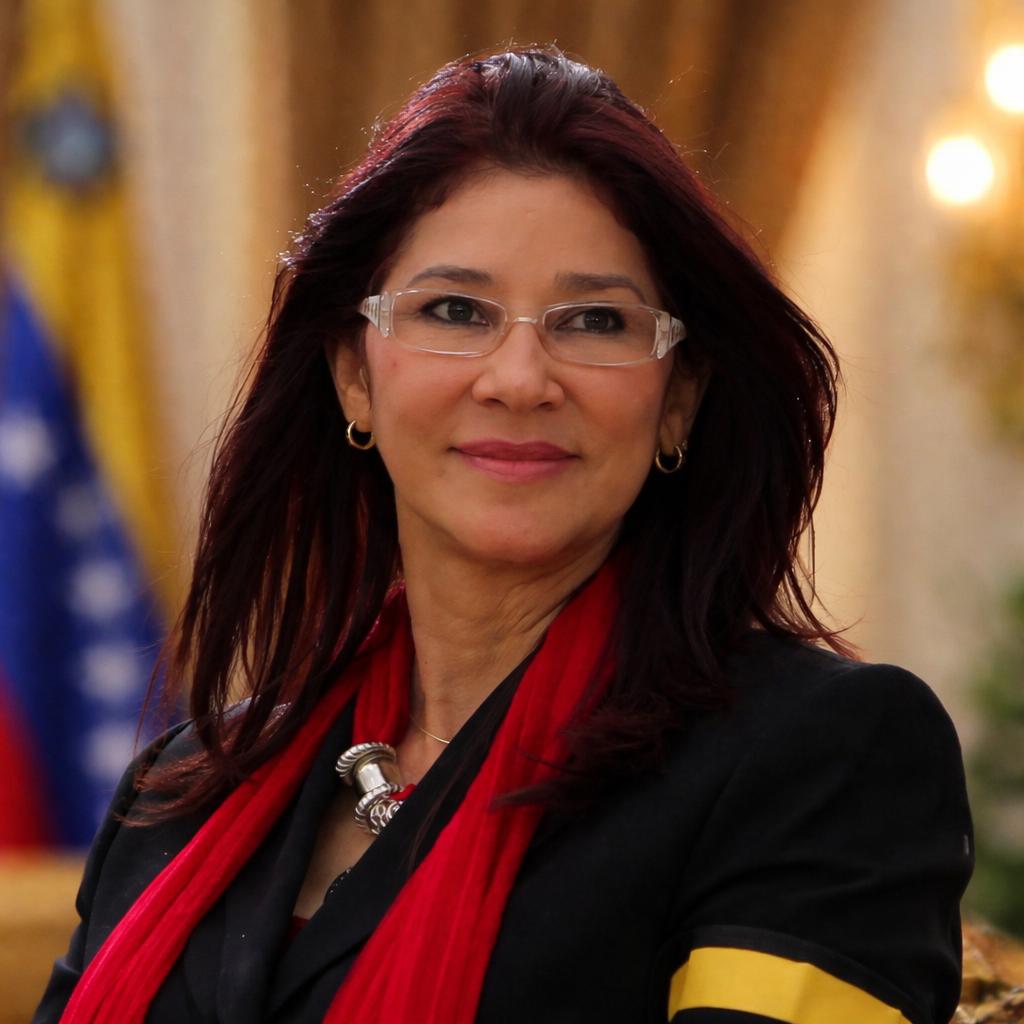
Cilia Adela Flores was born on October 15, 1956, in Tinaquillo, a small town in the state of Cojedes. Not Caracas. Not a political hub. Not a place where power circulates by inheritance. The province shapes a different type of person. Less theatrical. More persistent. Less inclined to improvise. That imprint remains visible later.
A legal education was not a social elevator for Flores, but a working tool. In Venezuela of the late twentieth century, law was not neutral. It either served power or undermined it. In the early 1990s, Flores entered the orbit of the Chavista movement. After the failed military coup of 1992, lawyers became decisive figures – not generals, not orators. They provided Hugo Chávez with a political future by turning defeat into a beginning.
That period is rarely described in detail. Documents are dry. Testimonies fragmented. Yet it was then that Flores secured her place in a narrow circle of people trusted without reservations. Not for ideas. For loyalty and precision.
Career
Flores’s political career developed without sharp leaps, but with a clear internal logic. Parliament. Procedures. Control of rules. In 2006 she became President of the National Assembly, the first woman to hold the position. Formally, a historic milestone. In practice, a sign of absolute trust.
One detail stands out. She replaced Nicolás Maduro in that role. At the time, it seemed incidental. Later, it was read differently. Not as coincidence, but as part of a longer construction of power.
In 2012–2013, Flores held the country’s highest legal state office. International sources describe the position variously as Attorney General or Solicitor General. Terminology varies; substance does not. She was responsible for the legal framework of the state at a moment when Chávez’s health was rapidly deteriorating and the question of succession ceased to be theoretical.
After Chávez’s death and Maduro’s victory in the 2013 election, Flores formally became first lady. Informally, she remained part of a very small decision-making circle. Reuters and AP described her not as a ceremonial figure, but as someone present in crisis discussions. No speeches. No explanations.
The sanctions imposed by the United States and Canada in 2018 confirmed her political status externally. These measures were not aimed at a president’s spouse, but at an independent figure seen as part of the ruling mechanism.
Personal life
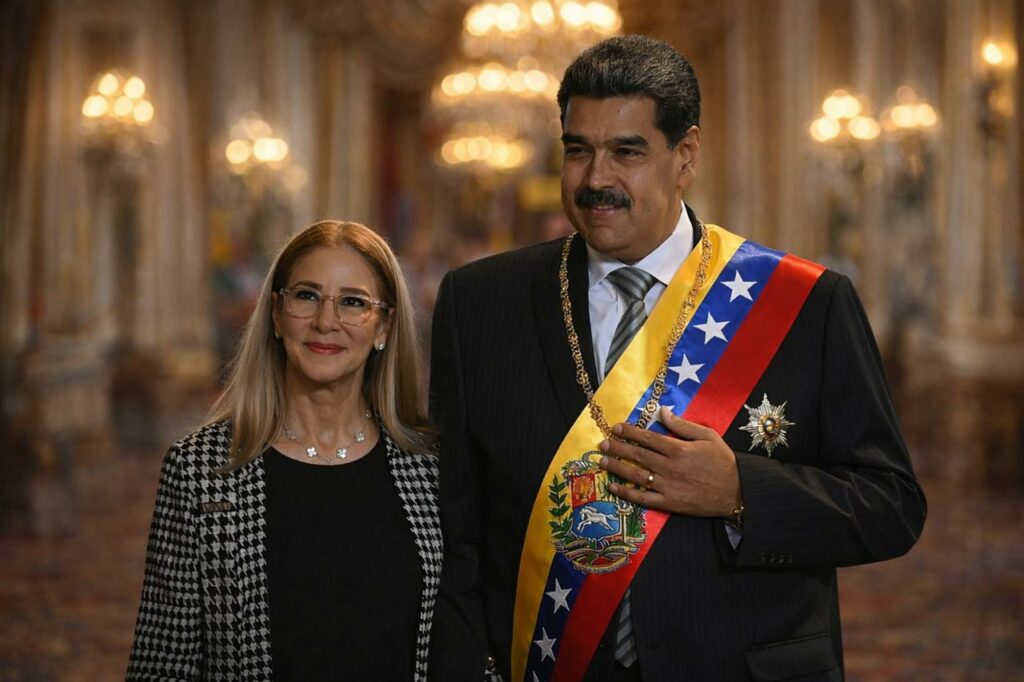
Flores’s personal life almost entirely overlaps with her political one. Her relationship with Nicolás Maduro never appeared purely private. They were politically linked long before marriage. The marriage merely formalized an existing structure.
In the Venezuelan system, power rarely allows clear separation of roles. Family, politics, and resources intertwine. That is why the case involving Flores’s relatives became such a destabilizing episode.
Efraín Campo Flores and Franqui Flores de Freitas were arrested and convicted in the United States for participating in a conspiracy to traffic large quantities of cocaine. A federal court in New York. A sentence. Documented facts.
No direct charges were brought against Cilia Flores. This matters. Yet the political damage was severe. The case showed how close criminal routes had come to the center of power. Questions arose on their own. Answers did not follow.
Flores rarely gives interviews. She does not publicly justify herself. This reads less like withdrawal than strategy. In an environment where every word can be weaponized, silence becomes a form of protection.
Now (detention and trial in the United States)
Until 2026, Cilia Flores remained a figure of influence without constant public focus. That changed abruptly in January 2026.
The U.S. side announced the capture of Nicolás Maduro and Cilia Flores during a military operation. The information came from official U.S. statements and was confirmed by major international news agencies as to the fact of the statements and actions themselves. Legal finalization at that stage was absent, and that distinction is crucial.
Reports referred to their transfer to the United States and preparations for judicial proceedings in New York. Venezuelan authorities denied the legitimacy of the operation. That was expected. What drew attention was different: Flores was treated not as an accompanying figure, but as an independent object of the operation.
Why her? The question arises immediately. The answer likely lies in her role. A lawyer. A coordinator. A holder of institutional memory. Someone who spent decades inside the system and understood how it functioned at its deepest level.